Elder care robots are often judged by what they can do in a short video. That misses the harder test: can the system help one older person safely, every day, without adding work for a caregiver? With no evidence pack supplied for this topic, the useful answer is a test of what counts as progress, not a made-up ranking of products.
- Fall response: A camera or wearable sensor must spot trouble and send the right alert.
- Physical help: A robot needs measured limits for lifting, walking support, or transfers.
- Daily routines: Reminders matter only when they work at the right time and respect privacy.
Fall detection that leads to useful action
A fall detector is only the first part of the job. The system must tell the difference between a person sitting down, dropping an object, and lying still after a fall. It then needs to send an alert to the right person, with enough detail to guide a response.
That chain has several points of failure. A camera may miss a person behind furniture. A wearable may be left on a table. An alert may reach a phone that nobody checks. Any claim of progress should name the sensor, the setting, the alert time, and the rate of false alarms.
For an older person living alone, false alarms matter because repeated mistakes can make people ignore the system. A useful trial would report missed falls and false alerts across many days, not one clean demonstration.
Robots that help with movement
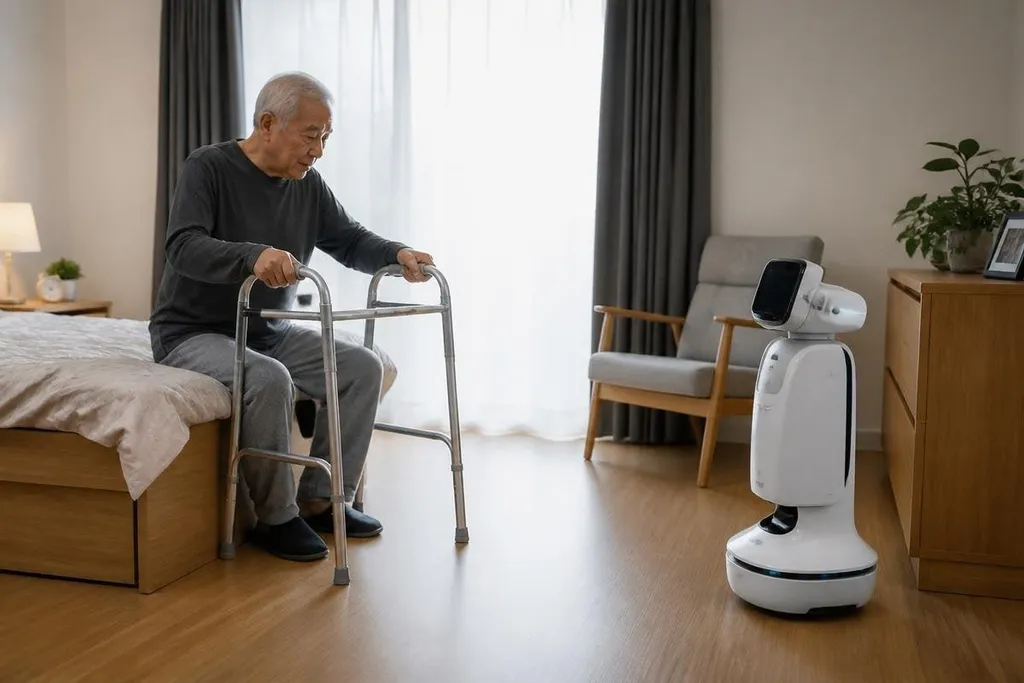
Helping someone stand, walk, or move from a bed to a chair is harder than carrying a box. The robot must sense a person’s weight and motion, limit force, stop when balance changes, and give the caregiver room to work.
A safe report needs numbers. It should state the maximum supported load, contact points, stopping distance, battery time, and the type of floor used in testing. It should also say who controlled the robot: the older person, a caregiver, or a remote operator.
That last detail changes the claim. A remotely controlled lift may help a care team, but it isn't an autonomous care robot. The machine may still reduce strain, yet the task depends on a trained person watching each movement.
Medication, reminders, and company
Robots can give spoken reminders, carry objects, guide exercises, or help a person contact family. These tasks look less dramatic than a transfer system, but they may fit daily care better because they repeat at set times.
The proof needs to show what happens after the reminder. Did the person take the medicine, complete the exercise, or answer the call? A robot that speaks on schedule has done its programmed task. It hasn't shown that the care outcome improved.
Privacy also belongs in the test. A system with microphones or cameras needs clear rules for storage, access, and deletion.
A privacy rule can decide whether an elder-care robot moves beyond a supervised trial. A dated report from Robot 24 can place the robot’s task, test setting, human oversight, and data policy beside the result. For a care manager, that record separates a controlled demonstration from work done around older adults every day.
The gap between a demo and care work
A short video can show movement. It can't show months of maintenance, staff training, repair costs, or what happens when the robot loses its network connection. Those details decide whether a care provider can keep using the system.
I'd rank a robot with modest abilities and published long-term results above a machine that performs a polished one-minute demo. Elder care has little use for a system that works only when the room, person, and task are arranged for it.
The missing evidence is not a small detail. Without named trials, dates, costs, and measured results, claims about the biggest breakthroughs remain proposals rather than findings.
A buyer's evidence checklist
Before a care provider pays for a robot, check these points:
- Named setting: Find out whether testing took place in a home, care facility, hospital, or lab.
- Human role: Record which tasks still need a caregiver or remote operator.
- Safety data: Ask for falls, stopped movements, false alarms, and other failures.
- Daily cost: Include charging, service, software fees, training, and replacement parts.
- Privacy rules: Check what the robot records, where data stays, and who can view it.
- Exit plan: Ask how staff can stop the system and return to manual care.
The next credible advance in elder care robotics will need more than a working demo. It will need a named trial, a clear price, measured safety results, and proof that the system still helps after the novelty wears off.